Enfield Wine Co.
Santa Rosa, Sonoma, California
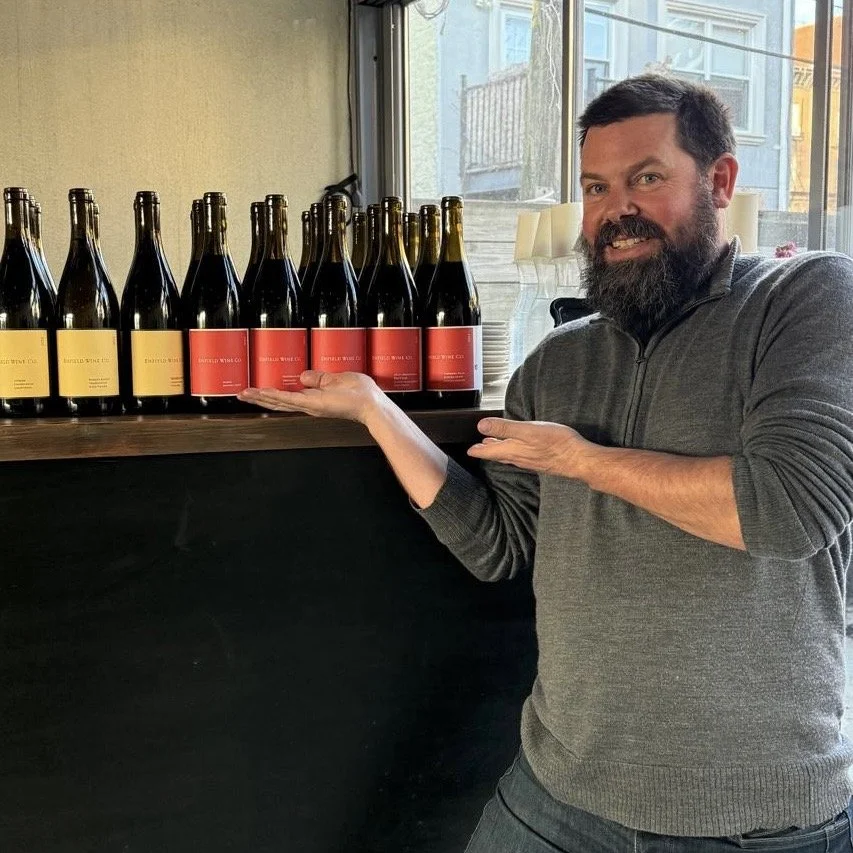
John Lockwood
Enfield Wine Co. is a project that, from the outset, helped redefine what California wine could be. Founded by John Lockwood and his wife Amy Seese, Enfield focuses not on producing “perfect” wines, but wines of personality — transparent, site-driven expressions that tell the story of vineyard, soil, climate, and vintage with honesty and precision.
The Enfield philosophy is rooted in the belief that each vineyard carries its own identity and that the role of the winemaker is to interpret rather than impose. Working exclusively with small vineyards and independent growers, John is drawn to sites with distinctive energy and character — from limestone-rich Chardonnay vineyards to volcanic Sonoma Coast hillsides and old-vine plantings rooted in deep sand. Drawing inspiration as much from thoughtful peers within California as from traditional European models, Enfield continues to explore overlooked vineyard sites and unconventional expressions that challenge expectations while remaining deeply rooted in place.
A defining aspect of Enfield’s approach is John’s immersion in both farming and cellar work. Native fermentations, restrained élevage, and gentle handling allow the vineyards to speak clearly, often shaping the wines more than any predetermined stylistic vision. While Enfield emerged alongside the broader “New California” movement, the wines feel less driven by rebellion than by curiosity, authenticity and a deep respect for place. The result is a collection of wines that balance California sunshine with freshness, minerality, tension and unmistakable site identity.
-
Enfield Wine Co. was founded in 2010 by John Lockwood and Amy Seese, initially as a small side project while John managed vineyards for Failla Wines under Ehren Jordan. After several years balancing both projects, John transitioned Enfield into a full-time endeavor in 2013. The winery takes its name from Lockwood’s middle name — itself his mother’s maiden name — reflecting the deeply personal nature of the project.
John’s path into wine was anything but traditional. Before entering the industry, he spent a summer hand-weeding vines at a winery in Vermont and later apprenticed under a master luthier in Oakland, an experience that sharpened his tactile and intuitive approach to craftsmanship. He entered the California wine world in 2004 working with David Mahaffey at Heron Lake Vineyard before completing harvests with Littorai under Ted Lemon, at Bodega Melipal in Argentina, and eventually at Failla, where he spent five years farming and managing estate vineyards on the Sonoma Coast and in the Russian River Valley.
A defining aspect of Lockwood’s philosophy is the belief that farming and winemaking cannot be separated. Early in his career, he intentionally moved between vineyard and cellar work, convinced that physical immersion in farming would make him a better interpreter of terroir and vintage conditions.
Rather than approaching vineyards through formula or stylistic dogma, he seeks sites that create a personal and emotional connection — vineyards with strong natural identity, freshness, and energy that guide the wines more than any preconceived vision.
-
Enfield Wine Co. works exclusively with small vineyards and independent growers, sourcing from some of California’s most distinctive and often overlooked terroirs. From the limestone and schist soils of the Sierra Foothills to the volcanic and quartz-rich outcrops of Wild Horse Valley, each site is selected for its ability to produce wines with clarity, freshness, and mineral tension. Coastal influences play a defining role throughout the portfolio, particularly in vineyards along the Sonoma Coast and Petaluma Gap where fog, wind, and extended growing seasons preserve acidity and aromatic complexity. Vine age, soil composition, elevation, and exposure are central to the identity of every wine.
-
“We approach our farming through the interpretation of each site and what each wine wants to be — this guides all our decisions in the vineyard. We focus on building healthy soil for deep roots, and minimal use of irrigation and chemicals.” — John Lockwood
Enfield prioritizes organic and sustainable farming practices throughout its vineyard sources, often working with growers farming organically or beyond organic standards. Farming is centered around soil health, deep root systems, minimal irrigation, and careful handwork in the vineyard. Many of the sites are dry-farmed or farmed with significant water restrictions, encouraging naturally balanced yields and wines with both freshness and concentration.
-
Enfield’s cellar philosophy emphasizes gentle extraction and minimal intervention in order to preserve site expression and energy. Fermentations are carried out with native yeasts, often in small open-top fermenters, with restrained use of punchdowns or foot treading. Whole cluster fermentation is frequently employed for reds depending on vineyard and variety, contributing aromatic lift and structure.
For white wines, grapes are typically whole cluster pressed before fermenting in large neutral oak puncheons with extended lees aging and full native malolactic fermentation. Reds are generally aged in neutral oak with minimal new wood influence, bottled unfined and unfiltered, and finished with only minimal effective sulfur additions. Across the range, the goal is transparency, freshness, and texture rather than power or heavy extraction.
Wines
Citrine Chardonnay
Citrine Chardonnay is sourced from four organically farmed vineyards averaging roughly 40 years of vine age: Rorick Heritage in the Sierra Foothills, Haynes Vineyard and Watson Ranch in Napa Valley, and Heron Lake in Wild Horse Valley. The diversity of soils — ranging from limestone and schist to volcanic ash, quartz, and calcareous clay — creates a Chardonnay that balances California sunshine with mineral tension and freshness. The grapes are whole cluster pressed and fermented with native yeasts in neutral 500L oak puncheons before undergoing full native malolactic fermentation and 11 months of lees aging.
Brosseau Chardonnay
Perched high in the remote Gabilan Mountains near Pinnacles National Park, Brosseau Vineyard is one of California’s most singular Chardonnay sites. Planted in 1980, the site’s distinctive combination of decomposed granite and limestone soils produces wines marked by intense minerality, vibrant acidity and remarkable aging potential, even from naturally tiny yields. Organically farmed by the Brosseau family, the vineyard’s powerful natural identity is preserved through John's restrained cellar approach, using native fermentations and neutral oak élevage to emphasize freshness, texture and the unmistakable signature of Chalone terroir.
Jurassic Chenin Blanc
Planted in 1982, the sustainably farmed Jurassic Vineyard in Santa Ynez Valley is situated on rolling hills at an elevation of approximately 1,100 feet. The vineyard takes its name from the site’s fossil-rich soils. These well-drained, limestone-laden sandy soils produce small vines and clusters. Jurassic's own-rooted chenin blanc vines produce a beautifully textured wine with abundant minerality and exotic fruit.
Azaya Vineyard Pinot Noir
Sourced from Azaya Vineyard in the far western reaches of the Petaluma Gap, this Pinot Noir comes from an extremely cool Sonoma Coast site where southern exposure allows full ripening while preserving freshness and precision. Native yeast fermentation and restrained extraction are used to maintain the vineyard’s purity and coastal tension.
Pretty Horses
Blend: 60% Tempranillo, 27% Garnacha, 13% Graciano with a small amount of Mourvèdre Pretty Horses is Enfield’s exploration of Tempranillo’s potential in California, inspired by the balance and freshness of traditional Rioja blends. The wine is sourced from organically farmed vineyards including Rorick Heritage Vineyard, Shake Ridge Ranch, and Heron Lake Vineyard. Fermented with 50% whole cluster inclusion in open-top fermenters using native yeasts and gentle foot treading, the wine undergoes a short maceration before aging for 12 months in a combination of 500L puncheons and neutral oak barrels, including a small percentage of American oak. Garnacha brings brightness and approachability while Graciano contributes acidity and structure, resulting in a lifted and energetic expression of California Tempranillo. The wine takes its name from Cormac McCarthy’s All the Pretty Horses.
Stained Glass Grenache Blend
Blend: 40% Grenache, 35% Carignan, 25% Tempranillo Stained Glass is sourced from two vineyards planted in the deep sandy soils of the Sacramento River Delta, a terroir John Lockwood believes produces some of California’s most compelling Grenache. Pale, juicy, spicy and lifted by vibrant acidity and fine tannins, the wine captures the purity and energy that sandy soils can bring to Rhône varieties. Fermented whole cluster with partial natural carbonic maceration — born partly from the density of the fruit in tank — the wine is crafted with minimal intervention to preserve freshness and perfume.
Cabernet Franc Sonoma Coast
Sourced from the Sonoma Coast, the wine undergoes native fermentation with gentle extraction and restrained oak influence to preserve freshness, aromatic lift, and transparency. Rather than emphasizing weight or ripeness, the wine highlights the savory structure and energetic character possible from Cabernet Franc grown in coastal California.
Waterhorse Ridge Vineyard Cabernet Sauvignon
Field blend of approximately 80% Cabernet Sauvignon, 10% Merlot, 5% Cabernet Franc, and 5% Petit Verdot Perched above the fog line in Fort Ross on the Sonoma Coast, Waterhorse Ridge Vineyard is a tiny two-acre organically farmed and dry-farmed site planted by Jesus and Patricia in 1999 on mixed loam and volcanic soils. While much of the Sonoma Coast shifted toward Pinot Noir plantings in the post-Sideways era, this vineyard remained dedicated to Bordeaux varieties, proving that the region’s cool ocean air and extended growing season can produce Cabernet wines of depth, freshness, and natural balance at moderate alcohol levels. The vineyard’s elevation and long hang time allow the fruit to develop layered flavor and structure while maintaining vibrant acidity reminiscent of classic California Cabernet styles. John Lockwood considers it one of the best farmed vineyards he has worked with, with all farming done meticulously by hand. Fermented with 10–20% whole cluster inclusion and restrained new oak influence, the wine emphasizes site expression, freshness, and elegance over power.