Cascina FonTana
Perno, Barolo, Piedmont, Italy
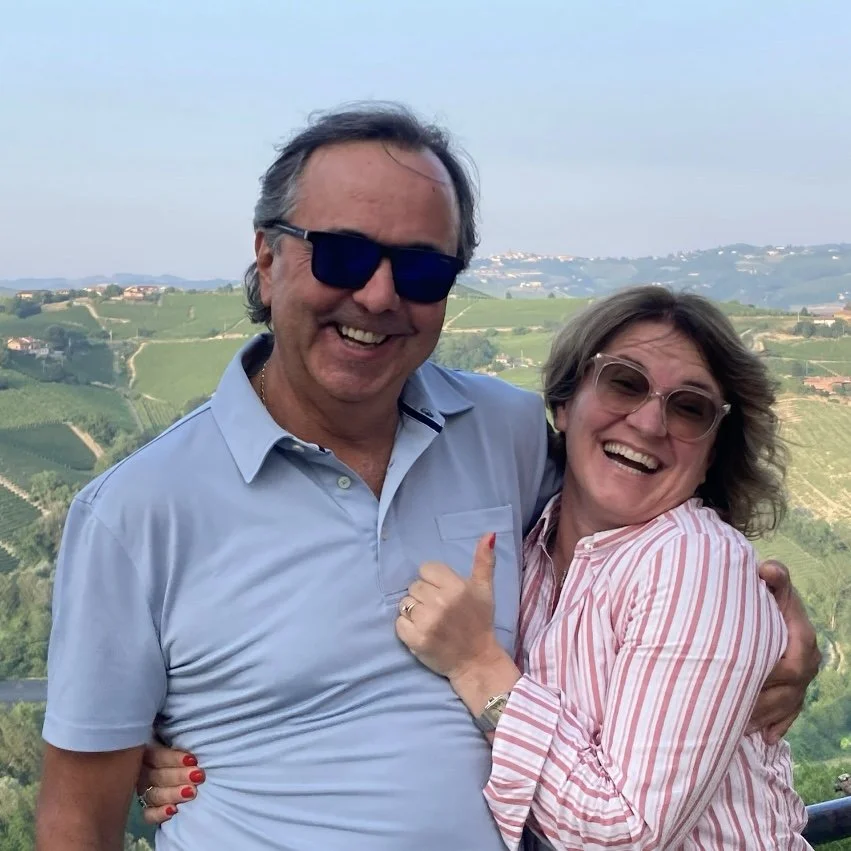
Mario & Luisa Fontana
The rare majestic beauty, vine-covered hills and castle-topped villages of Le Langhe embody one of Italy’s most storied wine regions. Here, in Perno, sits Cascina Fontana, 5 hectares of family-inherited vineyards run by Mario Fontana - an honest and unapologetically classic man, just like his wines - whose lineage runs generations deep in this area.
Cascina Fontana is as much a story of beautiful wines as it is of good people, respectful growers and genuine generosity. This is the land of Barolo, a wine steeped in tradition that, according to Mario, is best done ‘come una volta’, just as it was in the past:
“My philosophy in winemaking is the same as my philosophy in life. I believe that good things come from hard work. We live closely in touch with the land and follow the rhythms of the seasons. We must be patient, try to do things well, and always look to improve. Everything needs to be kept in equilibrium, in balance. I seek this in the vines, in my wines, and in my life”. -Mario Fontana
-
The Fontana family has been producing wine in Monforte D’Alba, in the heart of the Langhe, for six generations, since 1820. Throughout these 200 years, they have always adhered to preserving tradition from the vineyards to the cellar lined with botti. But it was in 1994 that Mario Fontana began his chapter, on a mission to restore what his grandfather had put in place. Timing was on his side, as Piedmont was pulsing to the beat of the radically courageous Barolo Boys and the region’s wines began to be recognized and exported all over the world. The winery produces only classic red wines from the Langhe, Dolcetto, Barbera and Nebbiolo and Mario oversees the entire production cycle along with his wife, Luisa.
-
We're in the storied hills of Le Langhe, south of Alba in Piedmont in the Northwest corner of Italy. Mario's parcels are in Castiglione Falletto (Valletti vineyard, Mariondino cru, Villero vineyard and Villero cru, and Il Pozzo vineyard), La Morra (Gallinotto vineyard, Giachini cru) and Sinio (Il Castello vineyard). Steep limestone hills prevail here, but there are two distinct soil types that lend to different styles of wines. Blue-tinted Tortonian soils in La Morra lead to a softer, fruitier early maturing style of Nebbiolo whereas Castiglione has both Tortonian and Helvetian soils, which typically make more structured fruit that takes longer to mature. Sinio's soils present alternating layers of gray marl and yellow sand that originated from deep sea beds.
-
Despite modern equipment, Mario’s approach in the vineyard is barely changed from the way is grandfather, Saverio, tended the land. Farming is done with a sustainable mindset, as Mario believes that the role of the winemaker is to intervene as little as possible in order to produce a pure expression of the grapes and the land. In the Langhe, there can be significant differences in picking times from vineyard to vineyard, so monitoring sugar and acidity levels is fundamental. Grapes are all harvested by hand.
-
The cellar is located in Perno, near Mario’s home. Grapes are de-stemmed and lightly crushed, then pumped in stainless steel for spontaneous fermentation. Length of fermentation depends on the grape variety, but generally longer and slower for wines that undergo more lengthy maturation to allow for greater extraction of tannins. After fermentation has completed, Dolcetto continues to mature in stainless steel vats while Barbera and Langhe Nebbiolo mature in a mix of large botte and used barrique for one year. The wines are kept as natural as possible, stabilizing in vats place outside in the cold during winter. Nebbiolo destined to become Barolo is aged in large Slavonian oak casks - purchased from the same cooperage for generations - for a minimum of two years before being assembled and further aged in cements vats for one year. Mario prefers not to filter wines as he believes “inevitably, you lose some of the goodness of the wine.”
Wines
Dolcetto d’Alba
Mario’s Dolcetto is a pure, stainless-steel–vinified wine made from 100% Dolcetto grown on 50–60-year-old vines in the Vigna del Castello (Sinio) and Vigna Gallinotto (La Morra). Harvested in early September, the wine ferments for 6–7 days and ages up to 10 months in stainless steel, with no oak influence, preserving freshness and varietal purity.
Barbera d’Alba
The Barbera d’Alba is also sourced from two vineyards: Vigna del Castello in Sinio, with 80 year old vines, and Vigna del Pozzo in Castiglione Falletto. Fermentation is short to preserve freshness, then the wine is aged in cement before passing to 220 liter oak barrels for 12 months. This is the only wine to mature in small oak barrels, which helps to round out the natural high acidity of Barbera.
Langhe Nebbiolo
The Langhe Nebbiolo is produced from nebbiolo grapes grown on the historic vineyard of Castello in Sinio and from the cru vineyard Il Pozzo in Castiglione Falletto. The Castello di Sinio vineyard has been in the Fontana family for more than 100 years, and was tended by his cousin for decades before he passed on intimate knowledge of the terroir to Mario. These nebbiolo grapes are vinified for a much shorter period than those destined to become Barolo, resulting in a wine that is fresh with a beautiful balance of tannin and acidity.
Barolo
“Come una volta”, or as it was in the past, is Mario’s signature house style, ever apparent in his Barolos. 100% Nebbiolo coming from three vineyard sources (the Villero and Valletti crus in Castiglione Falletto, plus the Gallinotto climate within the Giachini MGA in the commune of La Morra), fermented in cement for as long as 40 days followed by aging in 25hl Slavonian oak botti for 2 years. Assemblage takes place and then the wine is transferred to cement to age 1 more year, before being bottled and aged 1 year before release. A classic Barolo that demands patience and commands elegance.
Barolo Castiglione Falletto
Mario has been making this Barolo since 2013; an ode to the Fontana family whose roots run deep here. It is only made when the vintage allows, and is sourced from two vineyard holdings in Castiglione Falletto: 1.2 hectares in Valletti (one of the most esteemed plots in all of Barolo) and 0.6 hectares in Villero. For centuries, Barolo has been made here by humble growers whose greatest wealth was spirit, heart and honesty. Mario dedicates this wine to his family, who for 6 generations have continued to believe in the earth of Castiglione Falletto and the potential of its vines which they love, like him, so unconditionally.
Barolo Montforte d'Alba
In 2016, Mario rented a very small vineyard in Perno, just in front of the Fontana family home, which is planted to Nebbiolo and destined to make Barolo in the commune of Monforte d’Alba. The vineyard is at an altitude of 395 meters with southeast exposure. After Mario's first harvest here in 2019, immediately the decision was taken to vinify and age this parcel separately. After harvest, the grapes were left to macerate for two days prior to spontaneous fermentation which lasted for two weeks, followed by 25 days of maceration on the skins. The wine spent 7 months in cement vats followed by two years of aging in 10hL Slavonian botti, before being transferred to 54L glass damigiane to age for an additional year. Damigiane were commonly used “back in the day” where they would traditionally be filled with wine and left to rest in the rafters of the cellar. The first ever vintage of Mario’s Barolo Monforte (2019) was bottled in March of 2023 and released in February 2024.